

Join the Journal: Discover the Quieter Side of Cape Cod
Each month receive a photograph, a story and a moment of reflection from Cape Cod.
One email a month, no spam, unsubscribe any time.
Observing Cape Cod - Part Two: The psychology of seeing
In the previous essay, I wrote about observation as a practice of attention. I described Cape Pines not simply as a fine art photography business, but as a way of slowing down and noticing what is already present. The shifting light on water, fog moving over the salt marshes, weather shaping the dunes, and the countless small changes that often pass unseen.
I have often thought of observation as more than just a photographic technique, there is also a psychological component to it too. To observe deeply is to engage with the world differently. It is to move beyond recognition into awareness. To move beyond simply identifying what is in front of us and beginning to experience it more fully. Most of our lives are lived through familiarity, and quickly run on auto-pilot or system one thinking.
The human brain is remarkably efficient. It constantly filters information, reducing the overwhelming complexity of the world into patterns, heuristics, and assumptions. Psychologists often describe this as automatic processing. We recognise a tree, a beach, a path, or a house almost instantly. Once recognised, our attention moves elsewhere. This process serves us well. Without it, everyday life would become exhausting and our we’d run out of energy fast. Yet there is a consequence to this.
The familiar often becomes invisible; we stop noticing the places we know best. We take for granted the details of landscapes we encounter every day. We walk through environments carrying assumptions about what is there rather than attending to what is actually present. Observation interrupts this process, nudging us in to a more thoughtful way of thinking, asking us to remain with a scene longer than is necessary.
When I attended art college we were taught to stand before a landscape and delay judgement. Rather than immediately deciding what something is, attention is directed toward what it is becoming. Light changes, clouds gather, wind shift, tides rise and retreat and shadows lengthen. The landscape reveals itself not as a fixed object, but as a living process.
This is one of the reasons I find Cape Cod endlessly compelling. It is a place where change is constantly visible. The coastline is shaped by weather, tide, erosion, and season. Sandbars appear and disappear, salt marshes flood and drain, fog arrives without warning and dissolves just as quickly and pine forests bend under coastal winds. Every visit becomes a study of transformation.
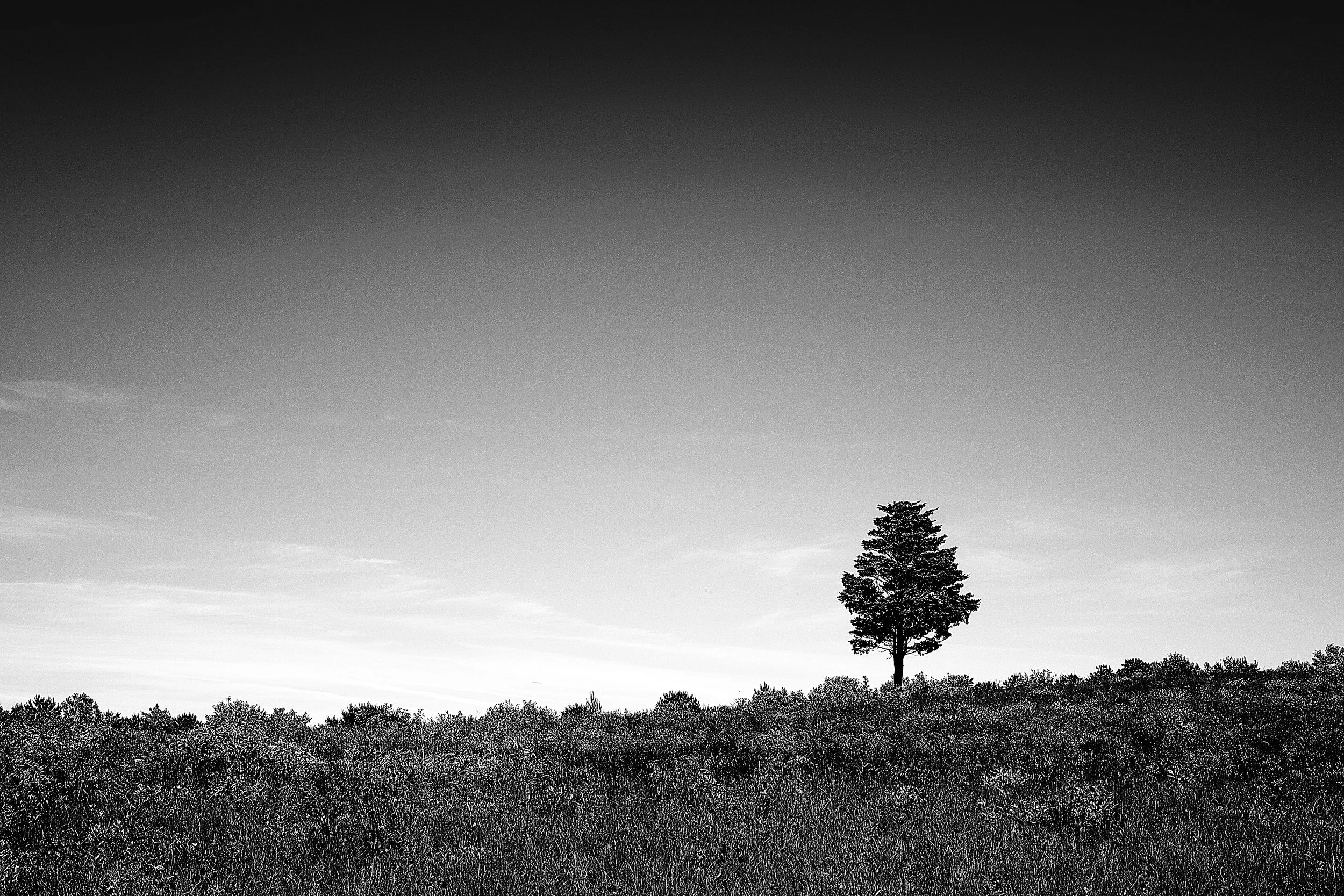
Lone tree along the Nauset trail on the Outer Cape Cod
Time is not hidden here, it is written into the landscape itself. Perhaps this is why Cape Cod rewards observation so generously. The longer and deeper you look, the more there is to see. What first appears still begins to reveal movement. What appears permanent reveals impermanence. What appears ordinary begins to carry significance.
Photography provides a framework for entering this state. The camera slows perception. Sometimes when I look through my viewfinder, it’s like looking into a different world, one of stillness, beauty and reflection; I get lost in there sometimes.
Particularly when working with analogue film, each frame carries weight and has value. There are no endless exposures, no immediate review, and no rapid correction. The process encourages patience and faith in your ability to capture the essence of that world in your viewfinder. Even when shooting digital, I tend to force the same philosophy onto myself by limiting how many photos I can take in one day. Waiting, watching, observing, and in so doing, something subtle begins to happen. The photograph becomes secondary and the act of observation becomes primary.
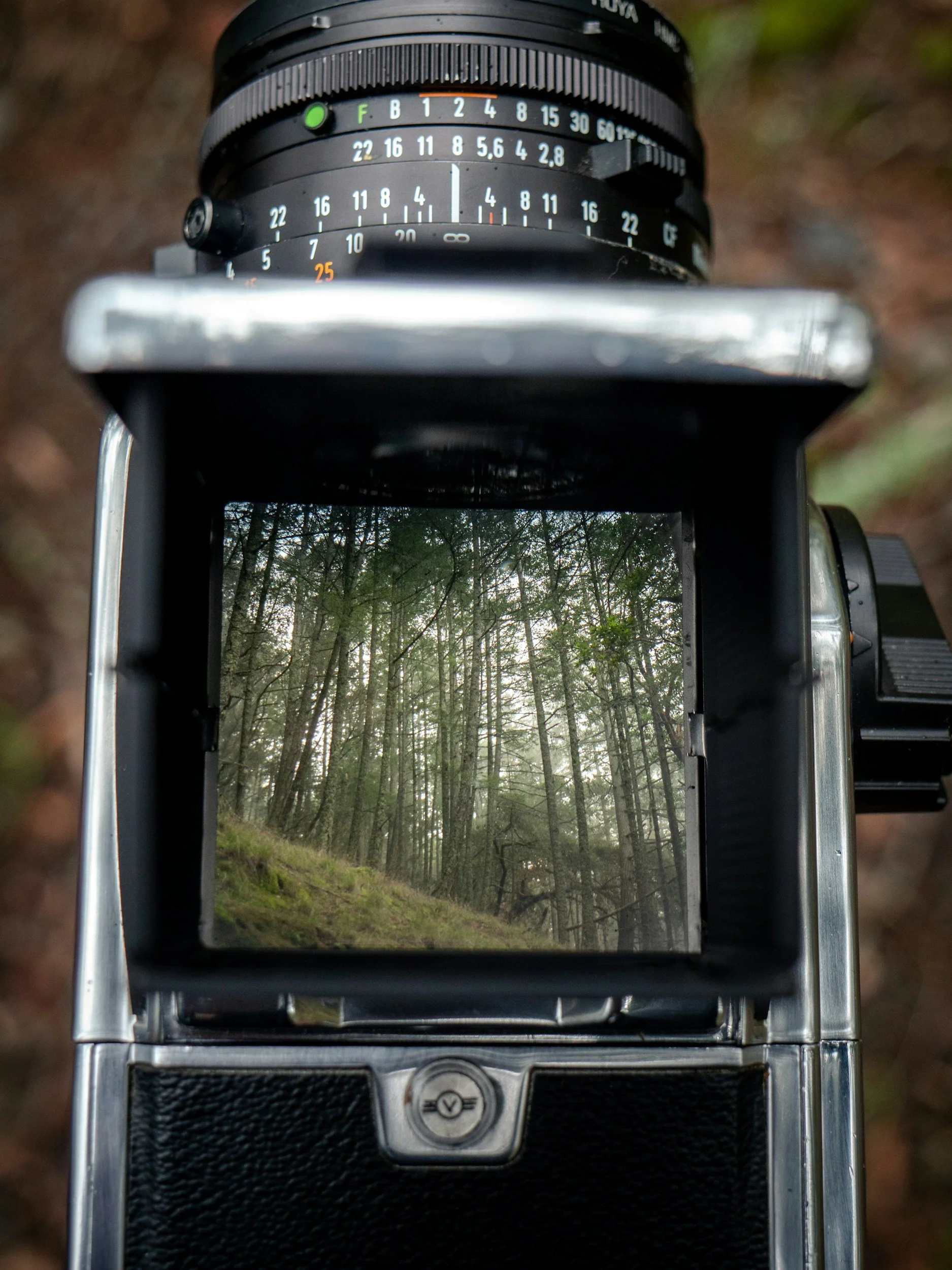
View through the Hasselblad 500cm’s viewfinder.
Many of the most meaningful images to me are not necessarily the most dramatic or technically impressive. They are often connected to the moments I felt most present within a place. Moments where the distinction between me as an observer and the landscape soften and where they become one. My attention settles completely on what is unfolding. This is where stillness emerges, a sort of flow if you will.
I’ve never thought of stillness as the absence of movement, but perhaps more to do with the quality of attention. The dunes continue to shift, the ocean continues to move, the wind continues through the pitch pines. Yet when attention becomes focused, a different experience begins to arise; the world feels quieter, not because it has changed, but because we have.
Stillness creates the conditions for reflection, and reflection is what remains after observation. It is the meaning that develops after the moment has passed. A photograph can preserve light, atmosphere, and form, but reflection preserves something less tangible. It carries the emotional resonance of a place. The feeling of standing within a fog-covered marsh at sunrise. The memory of light moving across weathered cedar. The sense of time held within a landscape that has witnessed generations before us. I believe a great photograph takes us back to those moments of stillness, again encouraging us to stop and decompress from the toil of the day’s hum and drum.
A good photograph creates experiences that linger long after the shutter has closed. This relationship between observation, time, stillness, and reflection sits at the heart of Cape Pines. They are not separate principles, but form a continuous set of principles I use as a fine art photographer.
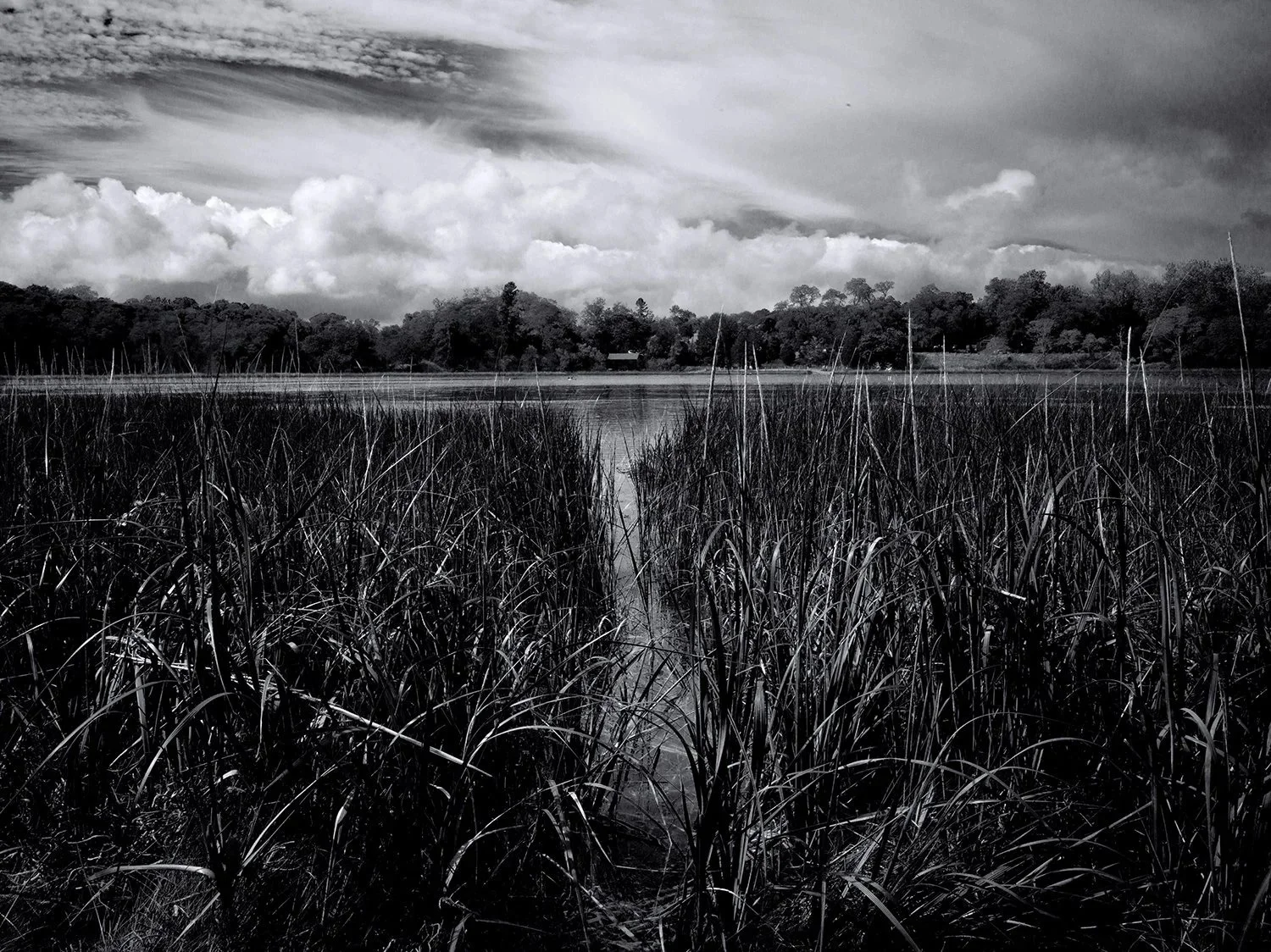
A moment of stillness; looking out over the tall grass to the house on Nauset Marsh.
Observation allows us to see, time reveals change, stillness creates presence and reflection gives meaning. Together they become a practice of attention. A way of engaging more deeply with our landscapes and environments and, perhaps, with ourselves.
As I continue preparing for the upcoming Thoreau project this autumn, these ideas remain close at hand. Thoreau understood that observation was not passive. It was an active engagement with the world. His writing demonstrates an attentiveness that transforms ordinary encounters into meaningful experiences.
The challenge he presents is as relevant today as it was in the nineteenth century, and given our reliance on mobile devices perhaps needed now more than ever. Do we truly see what is in front of us? Can we resist the urge to move immediately to the next thing? Can we remain with a landscape long enough for it to reveal itself? These are not simply photographic questions. They are questions about how we live.
Cape Cod continues to offer its own quiet answers. One tide, one fog bank, one lone cloud out on Brewster Flats at a time.
Sincerely,
G.
Observing Cape Cod - Part One: An upcoming study of Thoreau’s Cape Cod
Cape Pines is as much a practice of observing, as it is a fine art photography business.
The pace of life today is fast, it moves with constant distraction, constant movement. In that pace, attention becomes fragmented as our system one minds rule our behaviours. What is already here, light shifting across water, fog moving through the pines, weather shaping the coastline, is often missed.
Cape Pines exists to slow that process of seeing and force us to live in our system two minds a little longer and reflect. It is a way of returning attention to the natural world. To the coastline, the dunes, the pitch pines, the salt marshes, and the overlooked details that hold the passage of time. Through analogue film and digital photography, I work with light, weather, and atmosphere to reveal how place is always changing, even when it appears still.
I am not photographing spectacle, I am photographing conditions, the sunshine lighting the pine forests, the fog rolling in off the ocean, the grass bending in wind, the soft erosion of shoreline, the trace of time written into wood, stone, and sand. At its core, this is an exploration of attentive seeing.
The camera becomes less a recording tool and more a way of entering a slower state of mind. A way of noticing what is already present, but often unseen. In this space, ordinary scenes begin to shift. They become quieter, more open and more present.
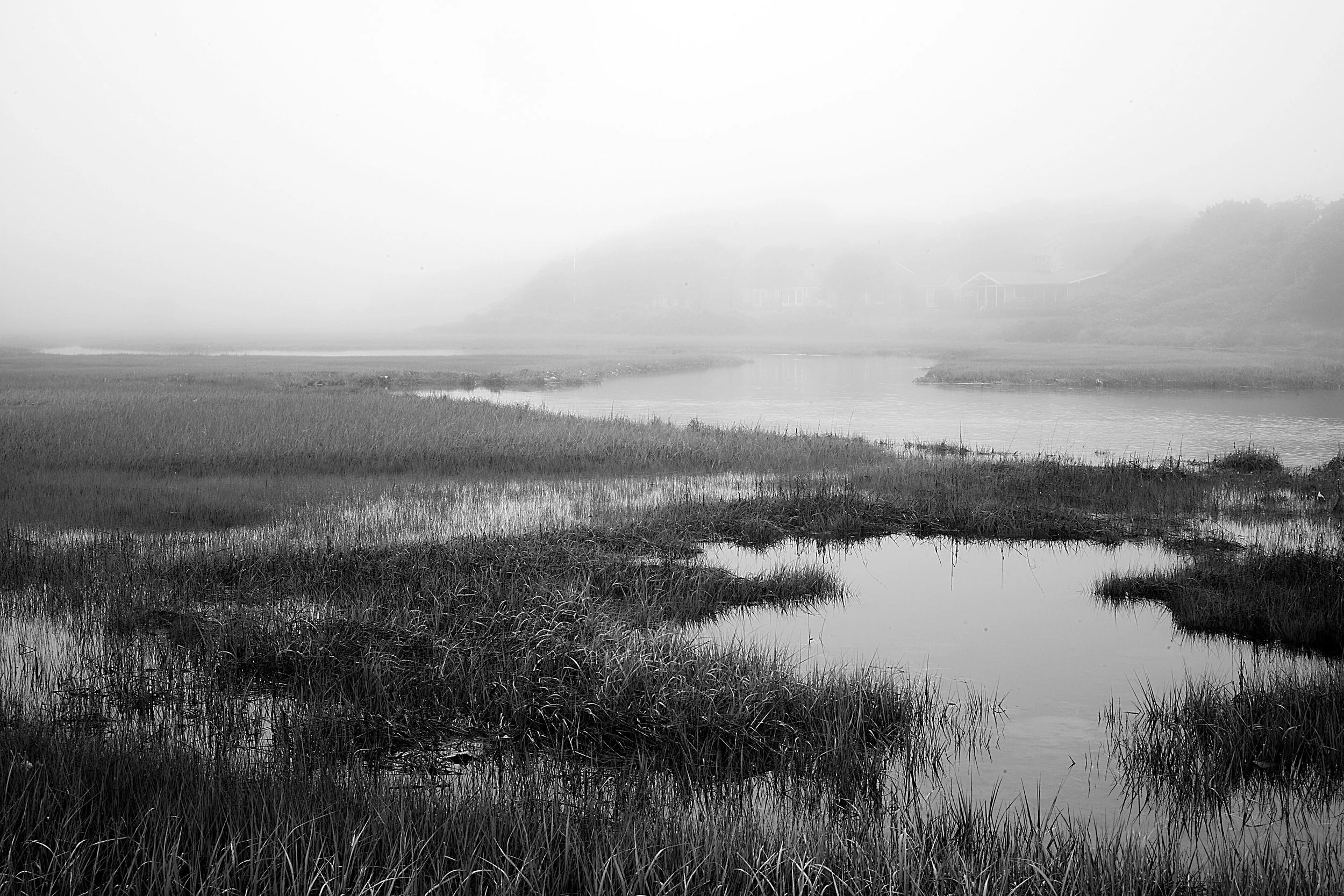
The fog rolling in off the ocean across the salt marshes along South Chatham, Cape Cod.
Why I photograph what I do
I am drawn to Cape Cod because it’s in constant change and time is present here more than other places. The coastline carries change, weather, tide, erosion, light. Nothing remains fixed for long. Even stillness here is temporary, that movement is what I return to.
Photography, for me, is not about capturing a final image. It is about attention. About slowing down enough to notice how light sits on water, how fog moves through pines, how wind writes patterns into sand. These are not dramatic moments, they are subtle and ask for patience. In that patience, something shifts. The act of looking becomes the subject itself.
And from that, reflection begins.
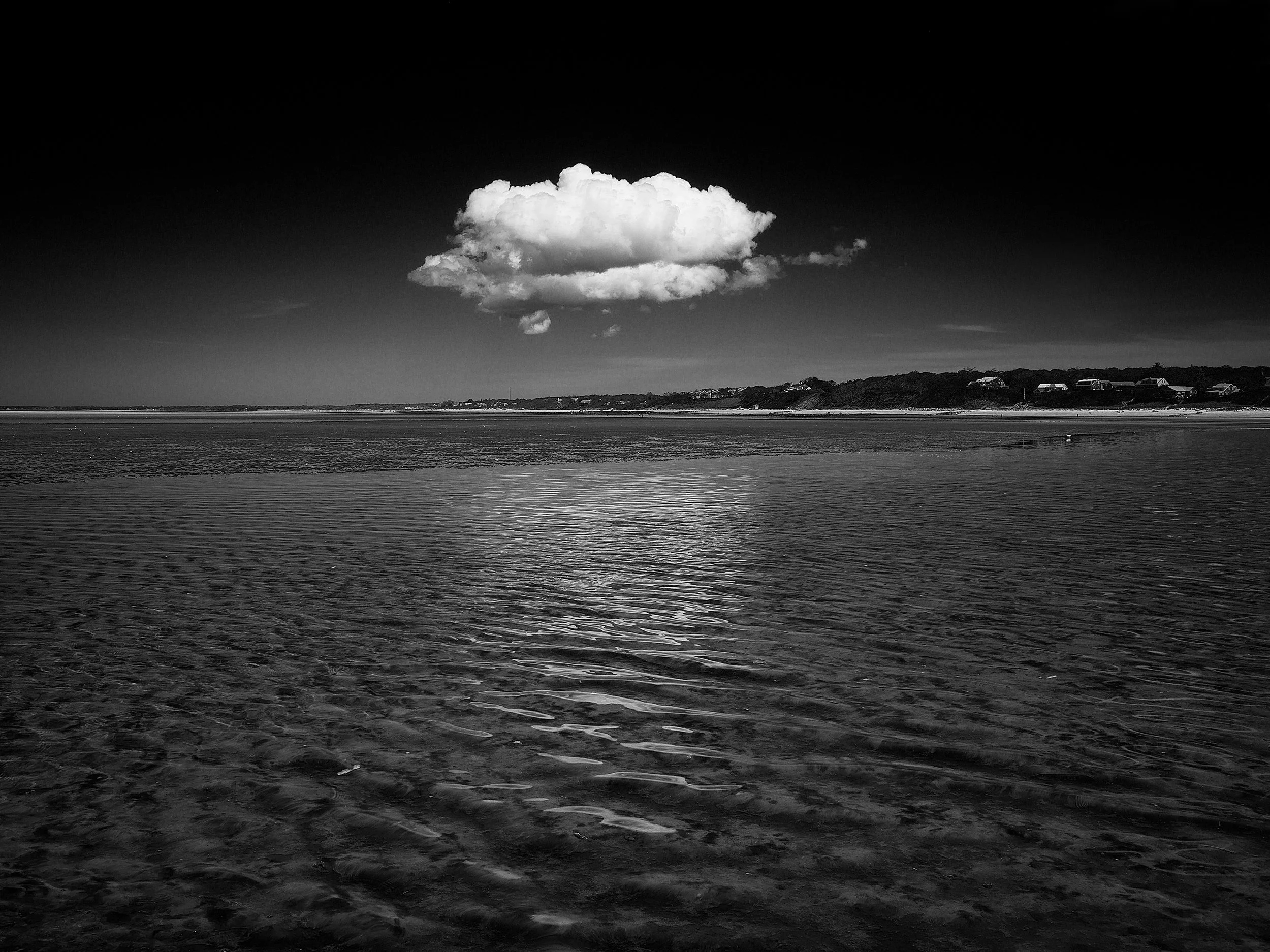
A lone cloud reflects in the shallow ocean out on Brewster Flats.
October Project: Thoreau’s Cape Cod
In October, I will begin a photographic project along Cape Cod inspired by Henry David Thoreau’s Cape Cod. Thoreau’s writing moves through observation. It carries a quiet attentiveness to coastline, weather, and time, not as spectacle, but as experience. His work aligns closely with how I approach photography today: as a practice of noticing.
This project will follow moments and places described in his writing. Not as illustration, but as reflection. I will move through shoreline, dunes, harbours, and coastal edges, working with analogue film and medium format photography. The intention is not to recreate what Thoreau saw, but to observe what remains and what has changed.
Fog, light, tide, weather. These are the elements that shape the work. Each visit will be an exercise in slowing down, in paying attention to what is present rather than what is expected.
It is a study of time, place, and perception.
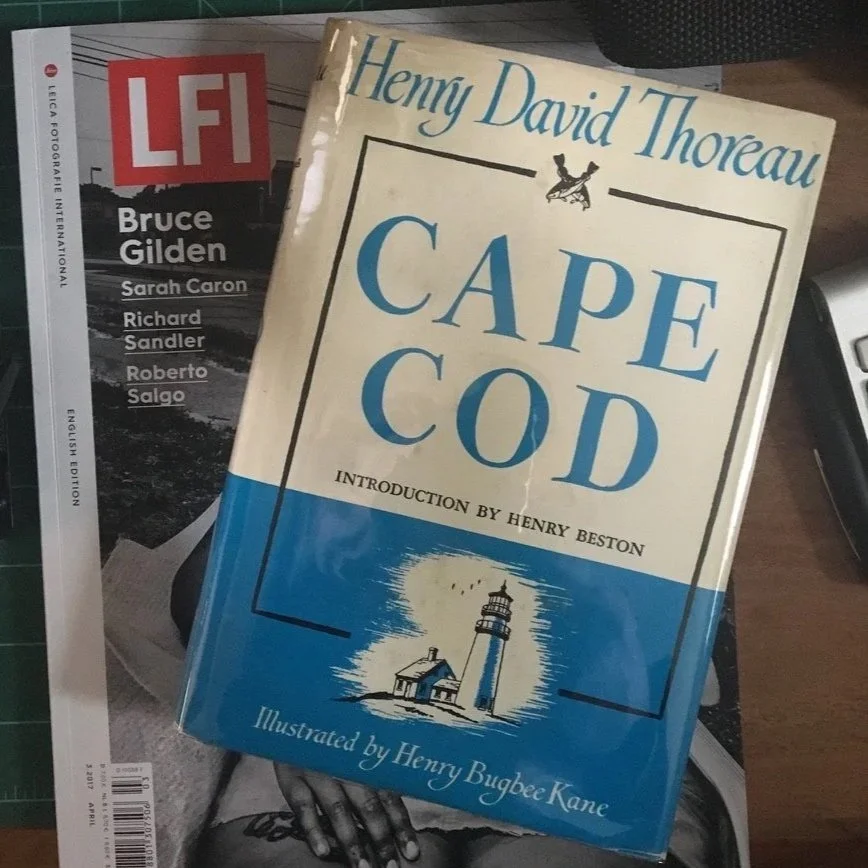
Henry David Thoreau’s Cape Cod.
Salt marshes up in Nauset.
Observe, Time, Stillness and Reflection
Cape Pines is guided by four principles:
Observation.
Time.
Stillness.
Reflection.
These principles are not separate ideas, they overlap in the act of photographing; one leads into the next. Observation begins the process, time is what becomes visible, stillness is what is held, briefly and reflection is what remains after the moment has passed.
This project in October continues that practice, moving slowly, working with attention and allowing place to unfold without force. Cape Pines is not about documenting Cape Cod as a destination. It is about what happens when attention is given to it over time and in that attention, something quieter appears, a space where observation becomes reflection, and place becomes something felt as much as seen.
Thanks for following this blog and I look forward to writing again soon.
Sincerely
G.
Memento Mori
Hello!
It’s been a while since I last wrote anything on this site, so I thought I would share an update on what I’ve been up to recently.
I launched this website a few months ago to create a home for my photography from Cape Cod. Over the years, I had amassed a large collection of images and wanted to finally do something meaningful with them, especially now that I have stepped away from my previous career to pursue a more creative life.
This felt like the right place to begin.
When I really stopped to think about who I am, I realised that photography is not my only creative outlet. I have always loved making things. I sketch often and, in the past, I painted as well. I would never claim to be an artist, but I always found a great deal of enjoyment in the process of creating.
More recently, I rediscovered printmaking.
There was something deeply appealing about the process of carving a design by hand and then producing multiple unique prints from it. It had been a very long time since I had done any printmaking, not since my days at art college, in fact. Reflecting on that made me feel a little sad, as I realised how much my working life had, in many ways, pulled me away from creativity. I reached a point where I no longer wanted to keep postponing these things and instead wanted to make the most of the time I have.
I wanted to stay within the theme of Cape Cod, as I believe constraints often help drive creativity. So, I began looking back through some of the less obvious subjects I had photographed over the years and found myself drawn to the old Puritan gravestones scattered across the Cape.
In particular, I became fascinated by the winged skulls carved into many of them.

I spent some time researching their history and discovered that these symbols are examples of Memento Mori, a Latin phrase meaning “remember that you must die”. At its core, it is a reminder that our time is limited and that we should use it well.
That idea resonated with me deeply.
I knew almost immediately that I wanted to use these symbols as inspiration for a block print series.
And so the process began.
Rather impulsively, I visited my local art store and invested in a set of chisels, printing ink, carving blocks, and a large pad of quality paper. I started sketching elements of the Memento Mori imagery that stood out to me and gradually combined them into a composition that felt right.
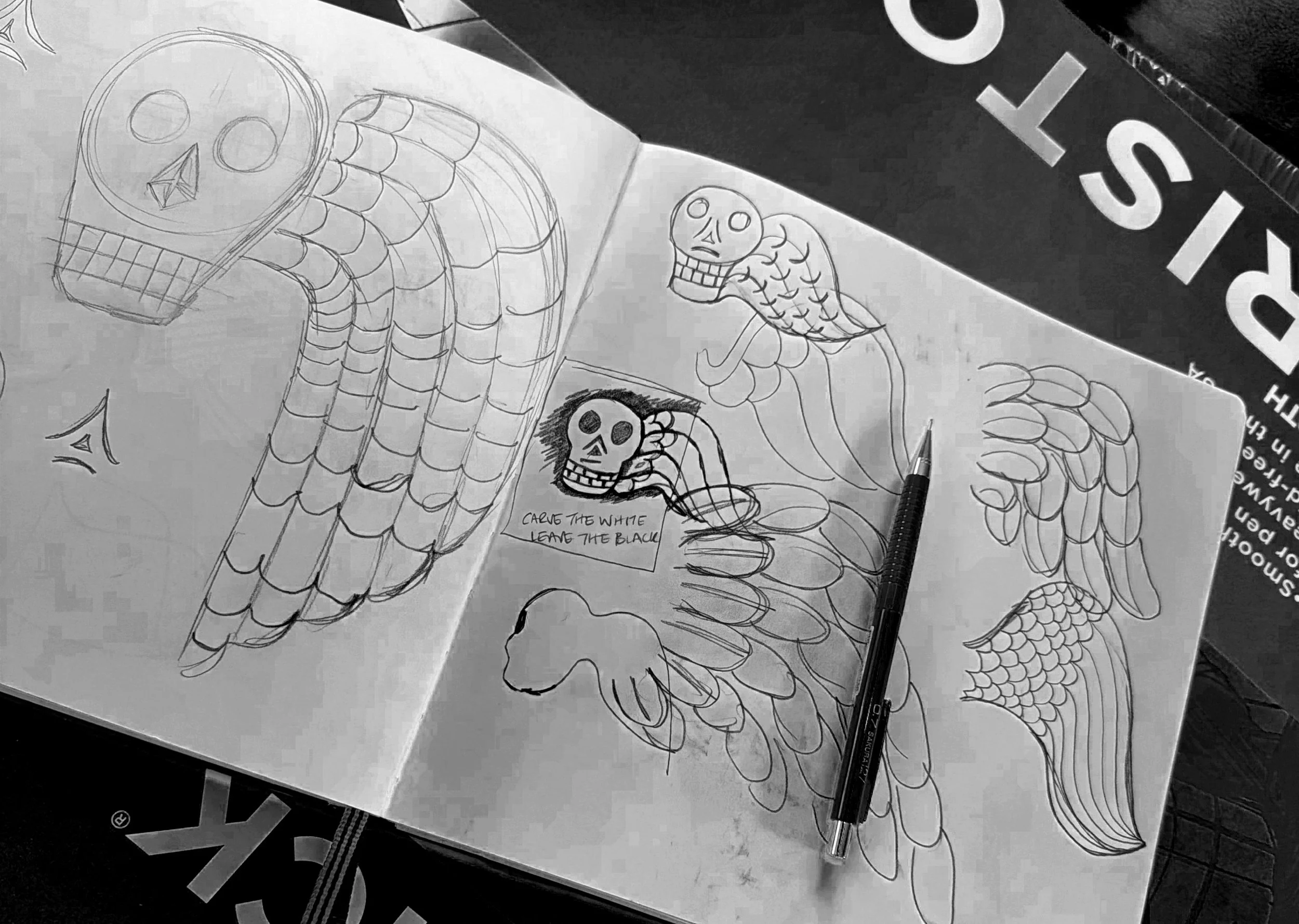
Sketching elements from the gravestones.
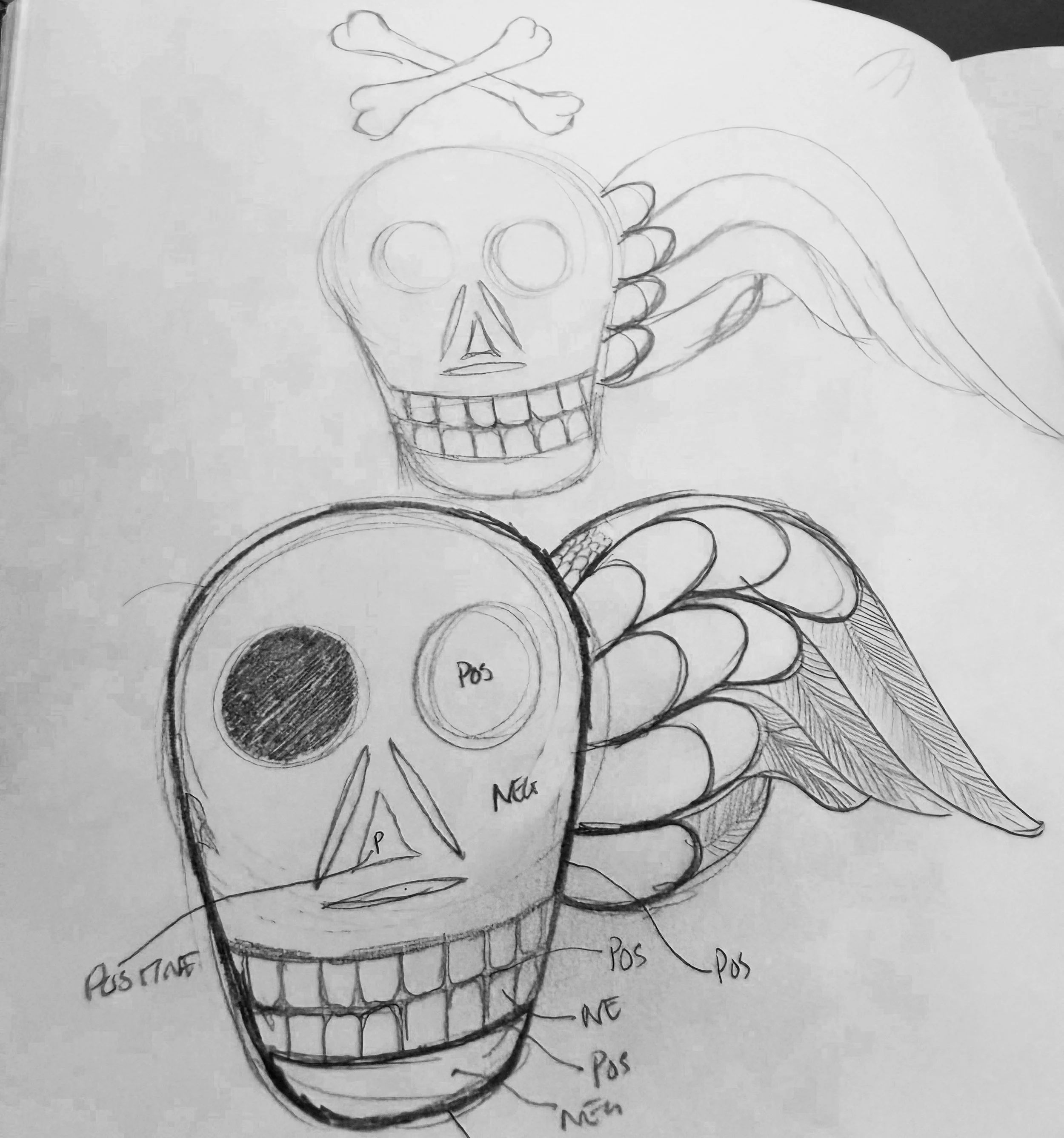
Working sketches to understand the carving process
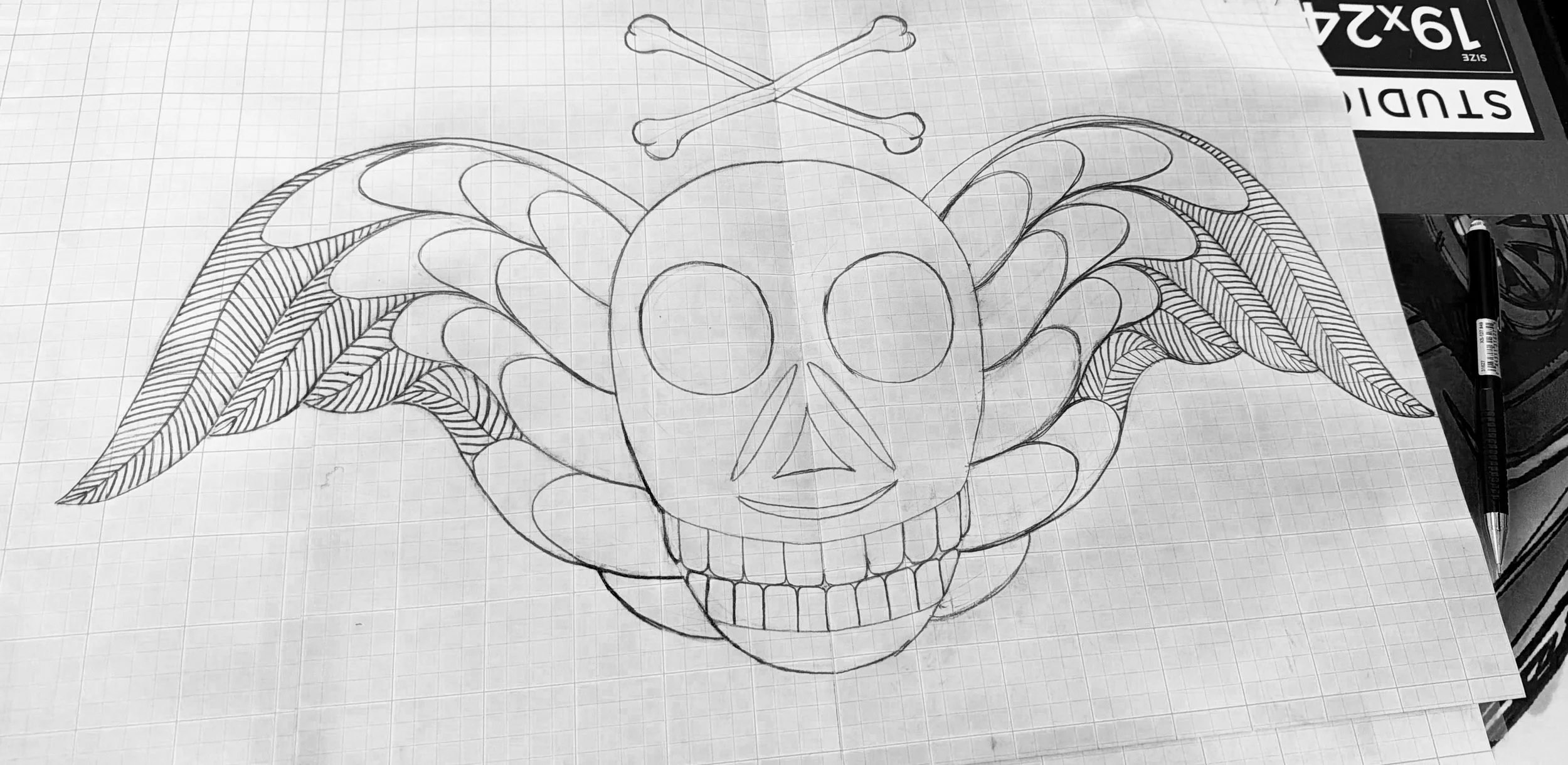
Transfer sketch ready to be applied to the printing block.
I wanted to move quickly and maintain momentum. I know how easy it can be to overthink creative work and become paralysed by perfectionism, so I gave myself just three days to complete the project and made sure there was good music playing in the background throughout.
Once the initial sketch was complete, I transferred and scaled it by hand onto large sheets of gridded paper to help maintain symmetry and better understand how the final carving might work. When I was satisfied with the design, I transferred it onto the printing block and refined the drawing using fine liners, varying the line thickness to create a greater sense of depth.
Then came the carving.
This was by far the most nerve-racking stage of the process. Before starting, I carefully marked which areas were to remain and which areas needed to be carved away to avoid making irreversible mistakes. Looking back, I can already see plenty of things I would approach differently next time, but overall I was pleased with how it progressed.
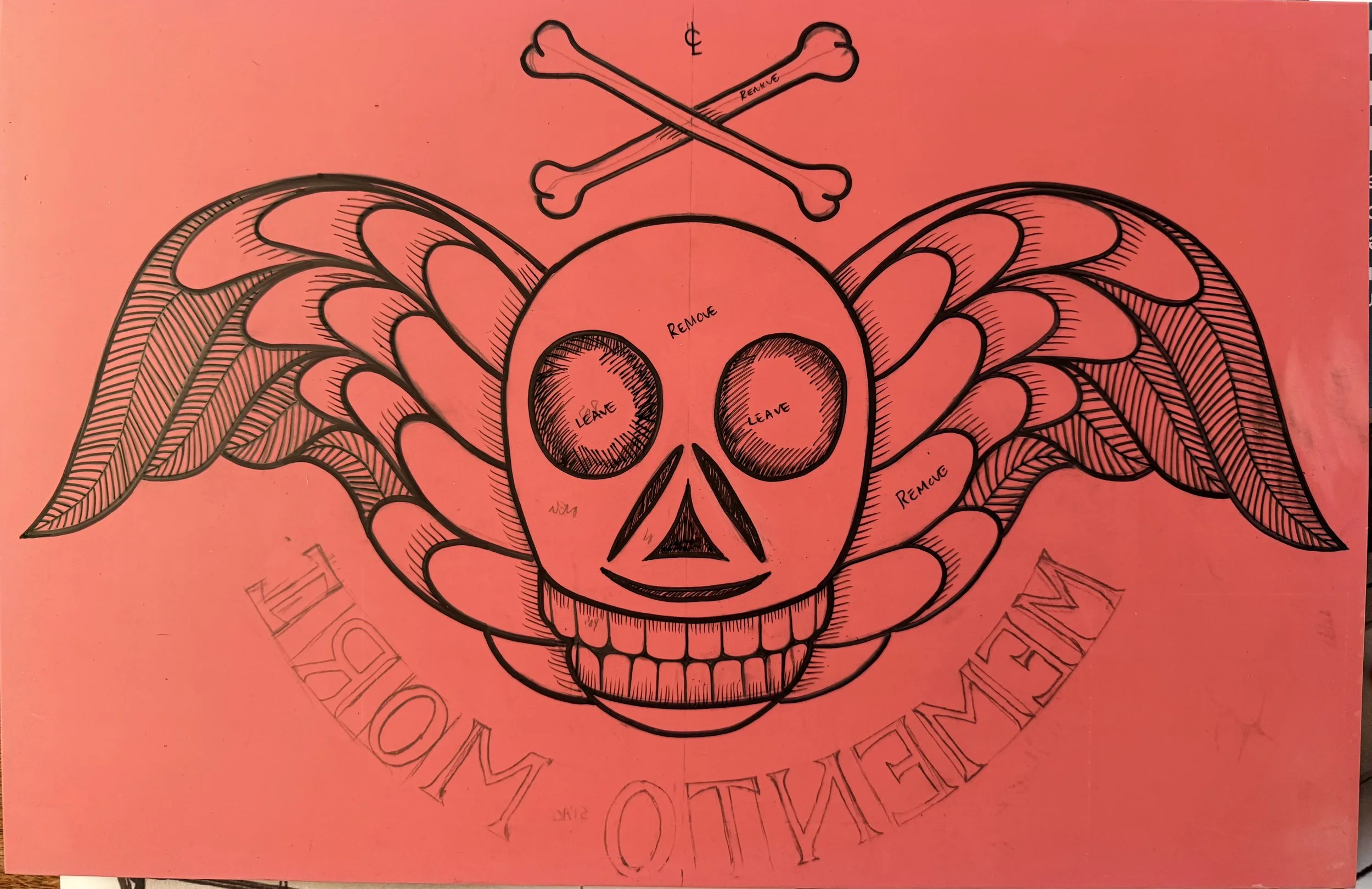
Image transferred to printing block.
Once the carving was complete, I rolled on the black ink and produced a test print to identify areas that needed further work. After making a few adjustments and refinements, I ran another test print, followed by several smaller tweaks to the finer details.
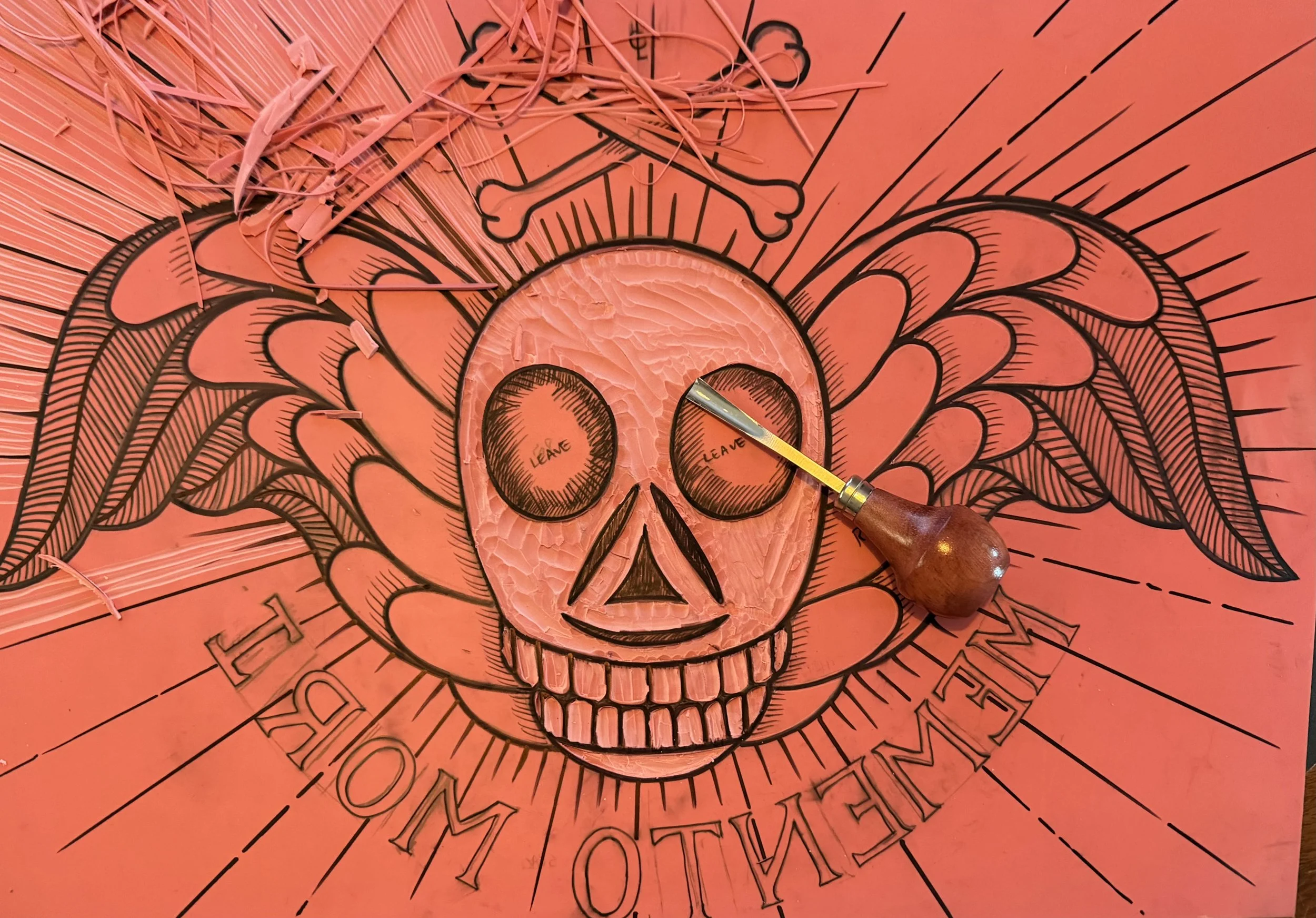
Starting to carve the printing block.
Finally, I produced ten prints as my first limited print series, which are now available for sale on the website.
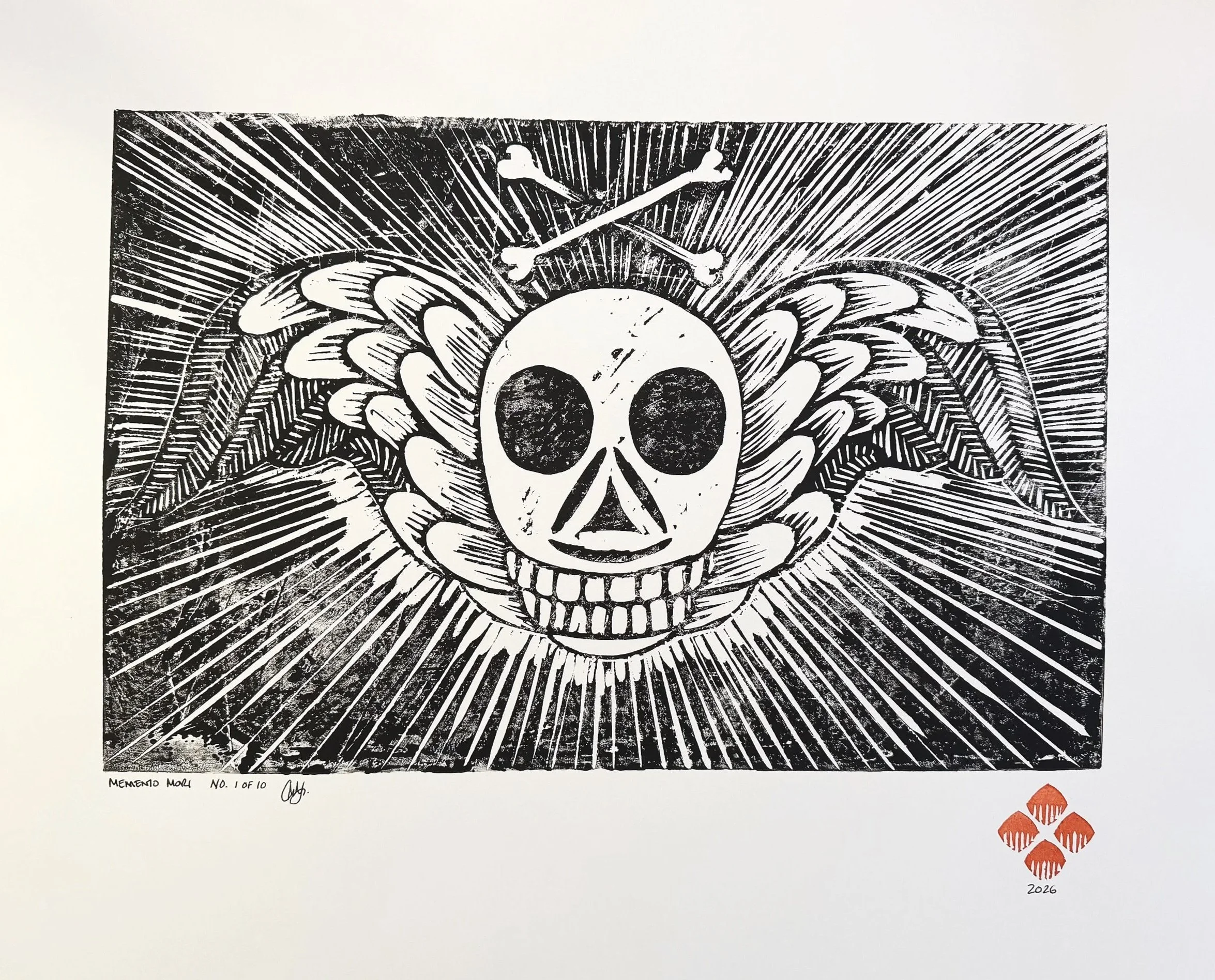
Final prints, signed, dated and numbered one through ten.
Moving forward, I want to continue experimenting with different carving and printing materials. The block material I used for this series worked reasonably well, but it was slightly softer than I would have liked and did not hold detail quite as sharply as I had hoped. Still, the entire experience was a learning process, and as I continue to grow and improve, I hope the prints will evolve alongside me.
Thanks so much for visiting, and remember to use your time.
G.
Why the Cape Stays with me.
I first visited Cape Cod in 2010, it was a warm and bright August morning, the sort of morning that’s filled with anticipation and a free mind. I remember waking early on the first day and noticing the breeze before anything else, the salty sea air coming through the bedroom window of the cottage, crisp and unmistakable. The sense of nature was all around me, glimpses of birds in the salt marshes, the sounds of coyotes, and the aroma of pitch pines in the warm August air. That feeling never really left me.
I’ve been back many times since, and if I’m honest, I don’t fully understand what keeps pulling me there. There’s something about the Cape that feels like a belonging. I feel happier there, more present. It’s vibrant and alive, but not in a loud or overwhelming way. There’s an authenticity to it, and even a quiet sense of struggle, the sort that comes with living close to the elements. Oddly, that makes it, and me, feel more real and alive. It’s not just a place, it’s a feeling and a way of life.
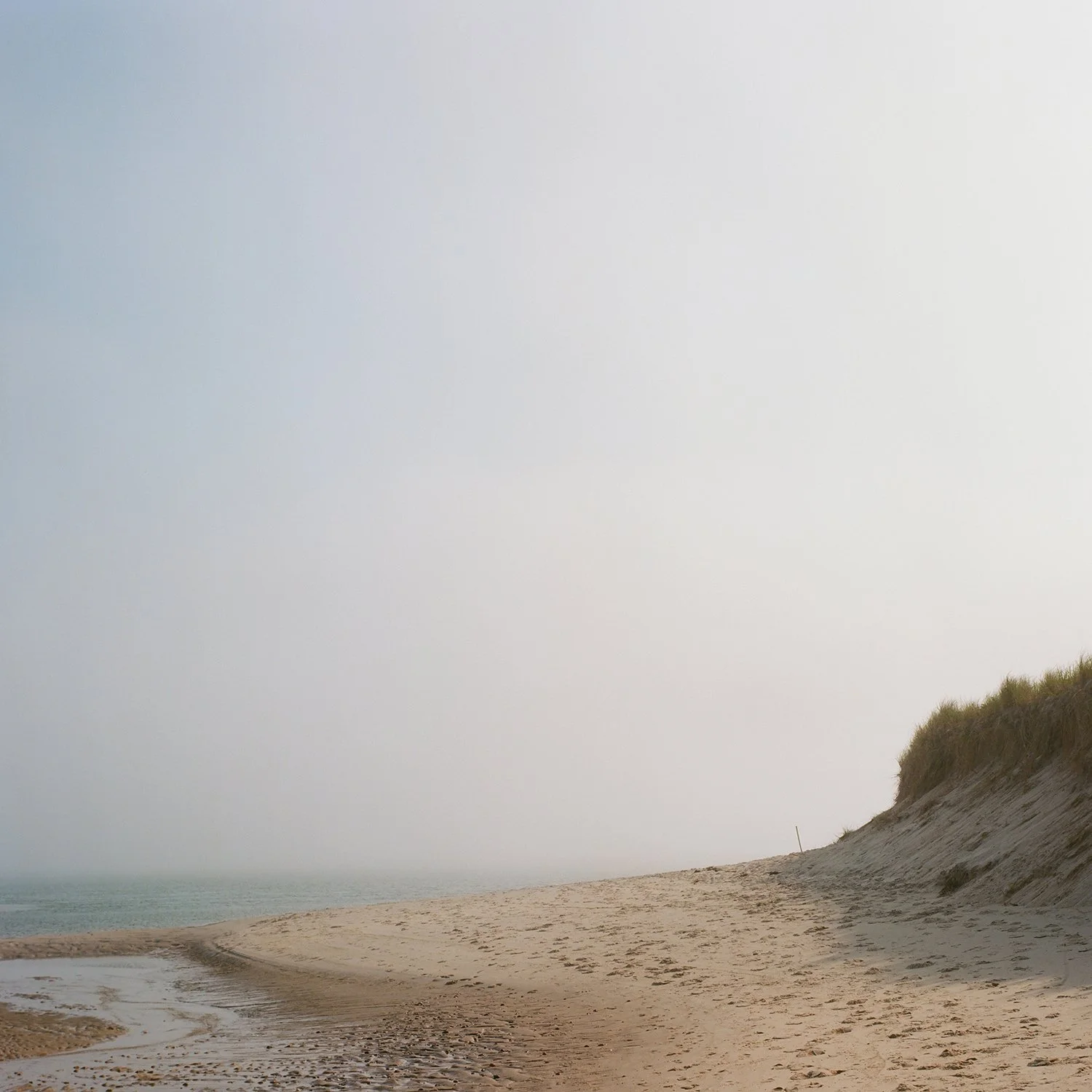
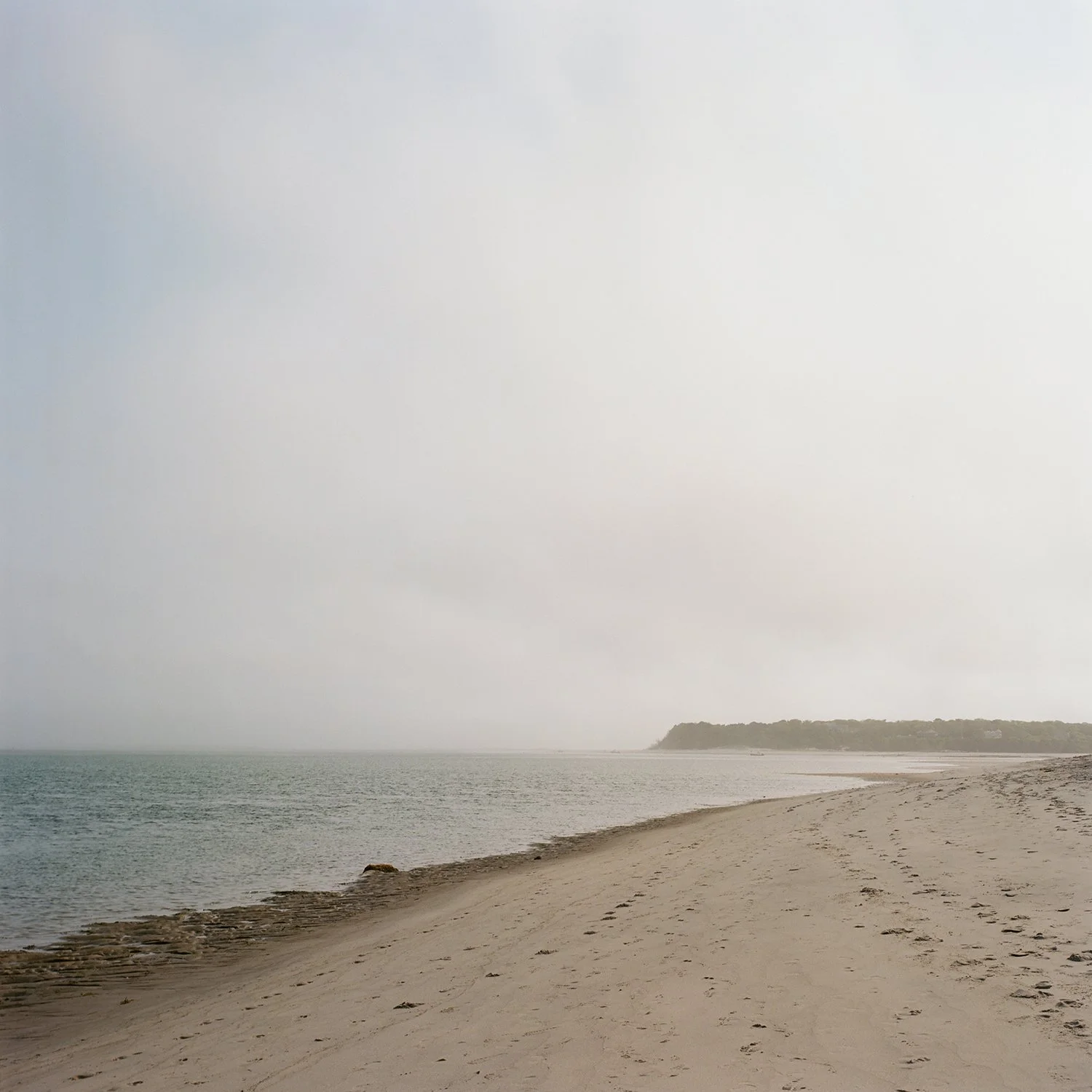
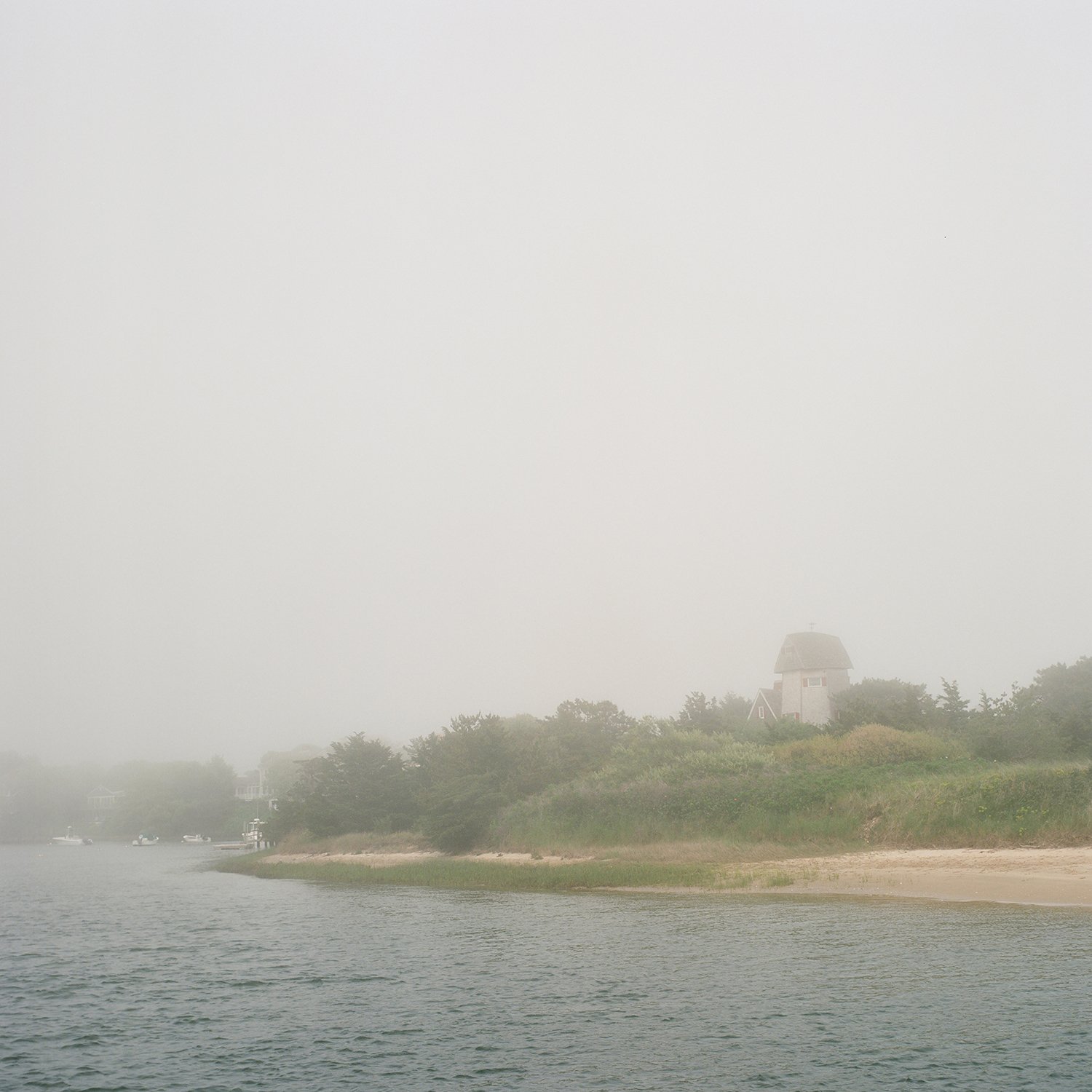
Life moves at a different pace, not dramatically slower, but just differently. You don’t think about time in the same way. You wake, you walk, you notice things, and the day unfolds without needing to be managed. Being out in nature feels restorative in a way that’s hard to replicate elsewhere. The light plays a large part in that, it’s dynamic, constantly shifting, one moment it’s bright and clear, the next it softens, diffuses, disappears into fog. The weather moves in the same way, never static and constantly painting the landscape with different colours and light. I’ve always been drawn to the fog when it rolls in off the ocean, the way it quiets everything, softens edges, and changes how you see even familiar places.
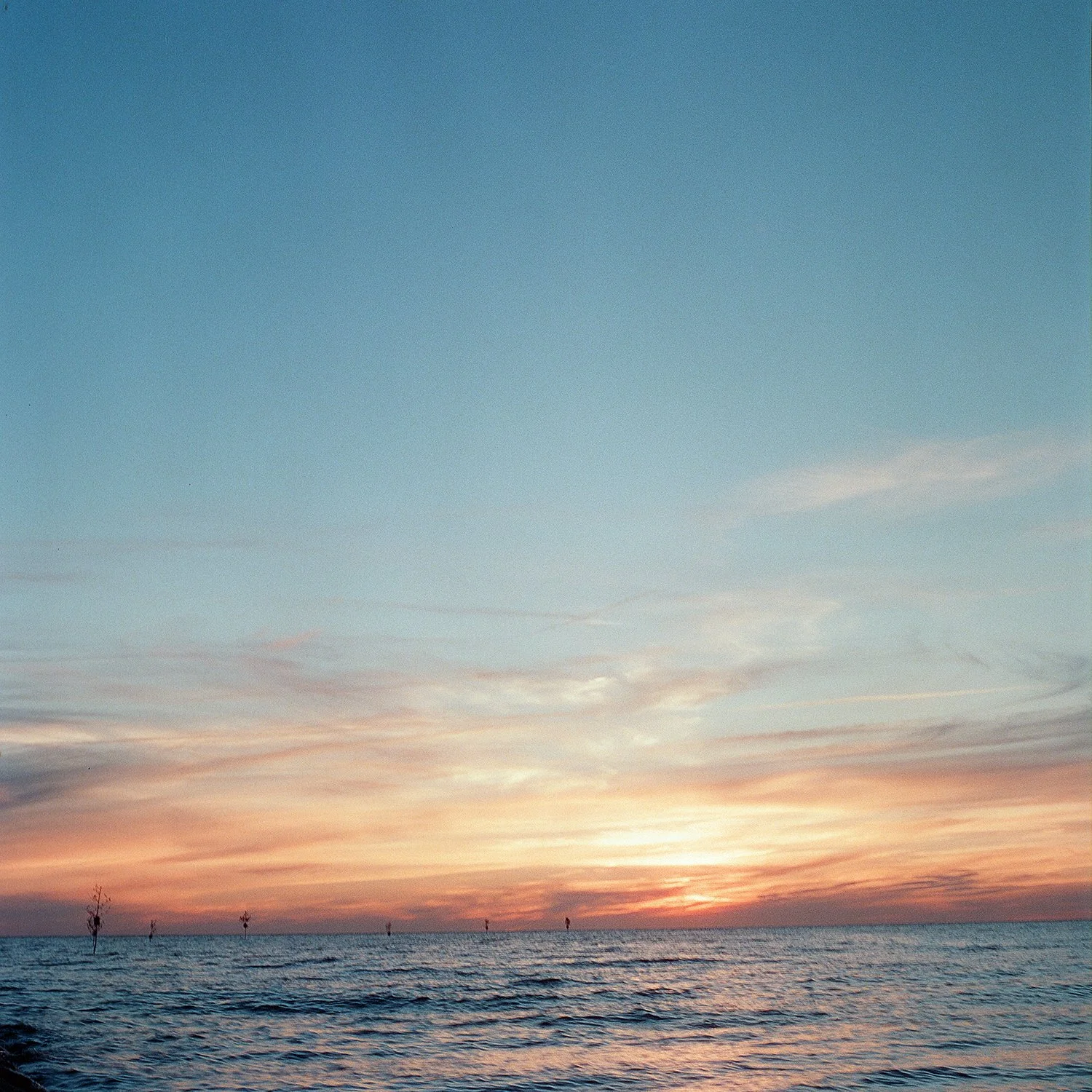
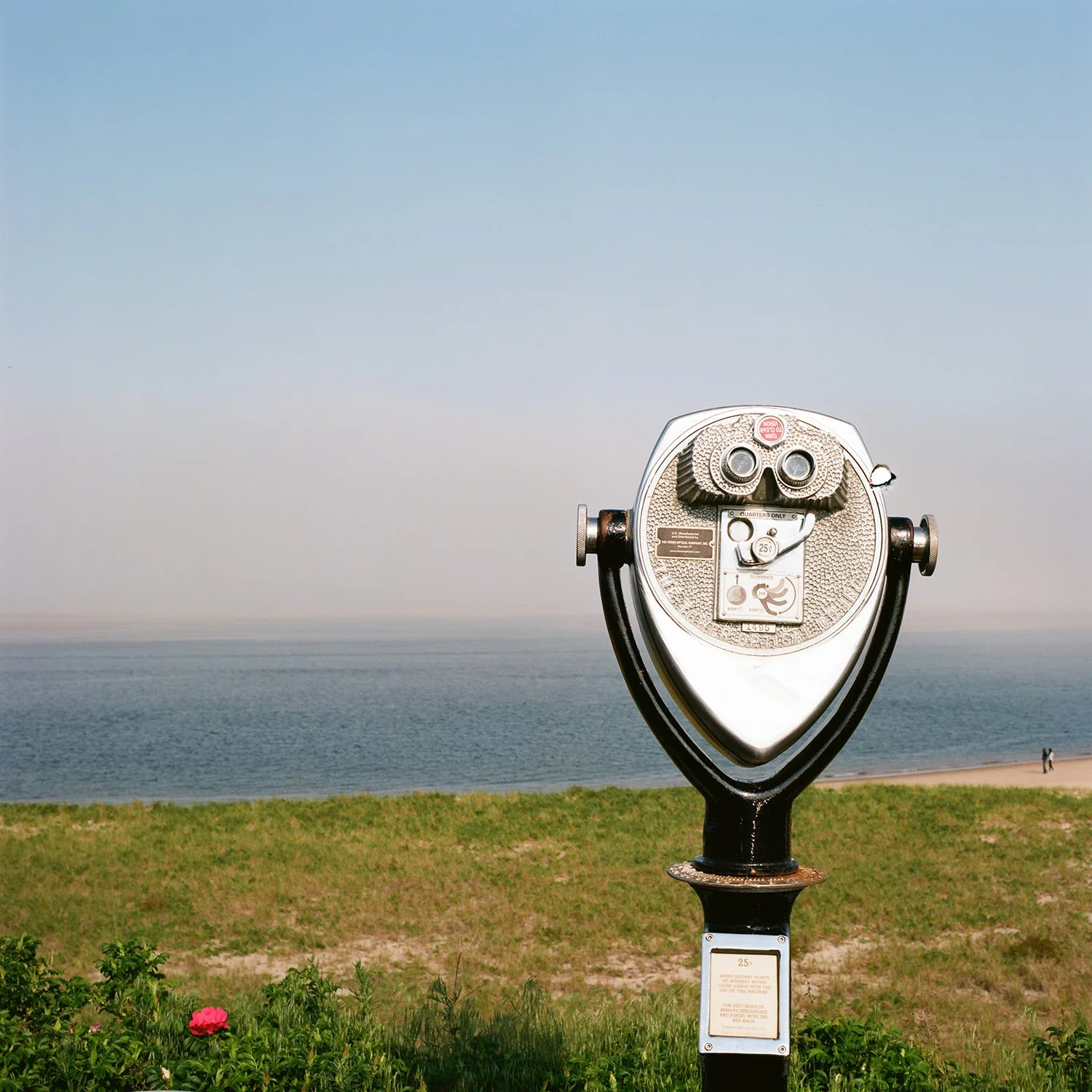
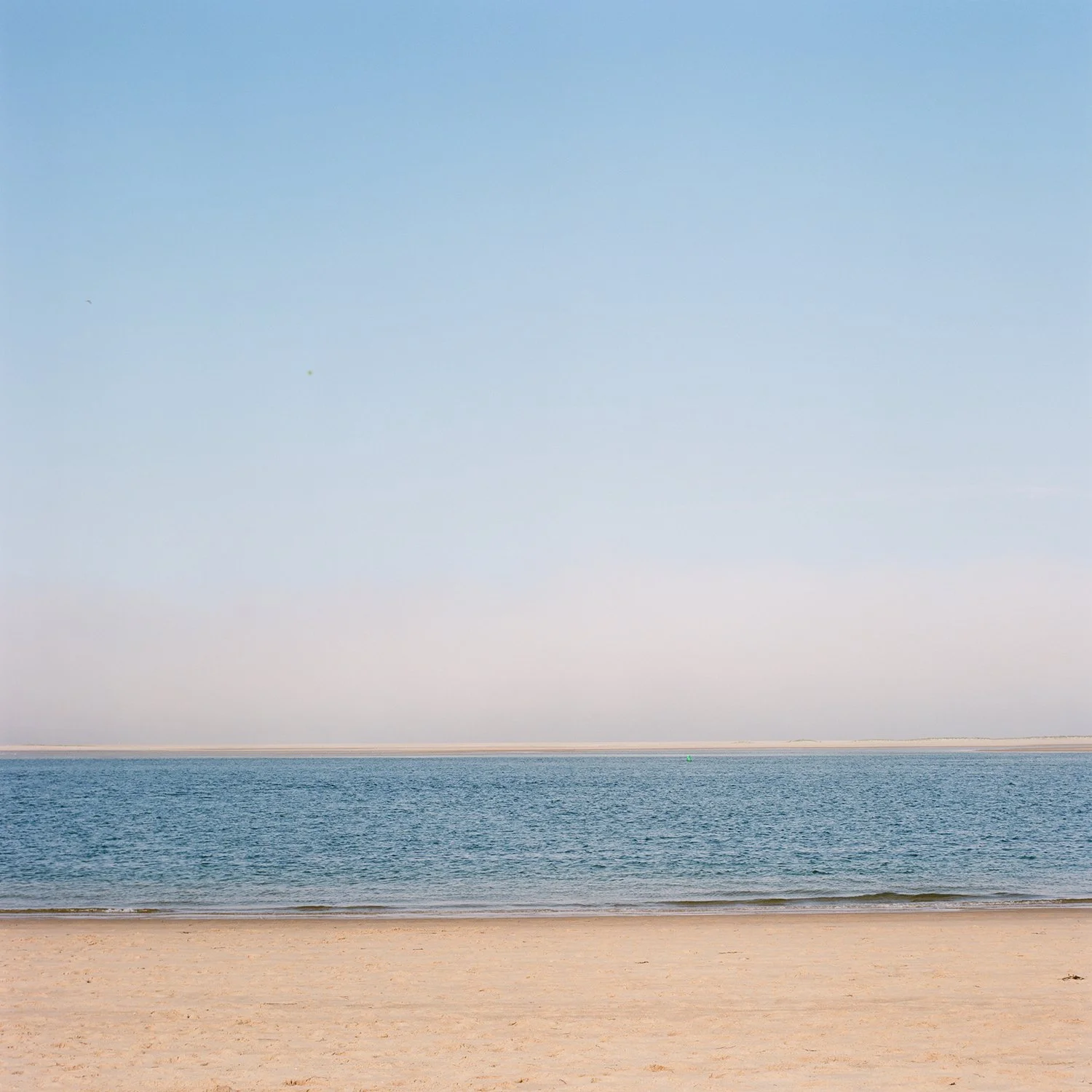
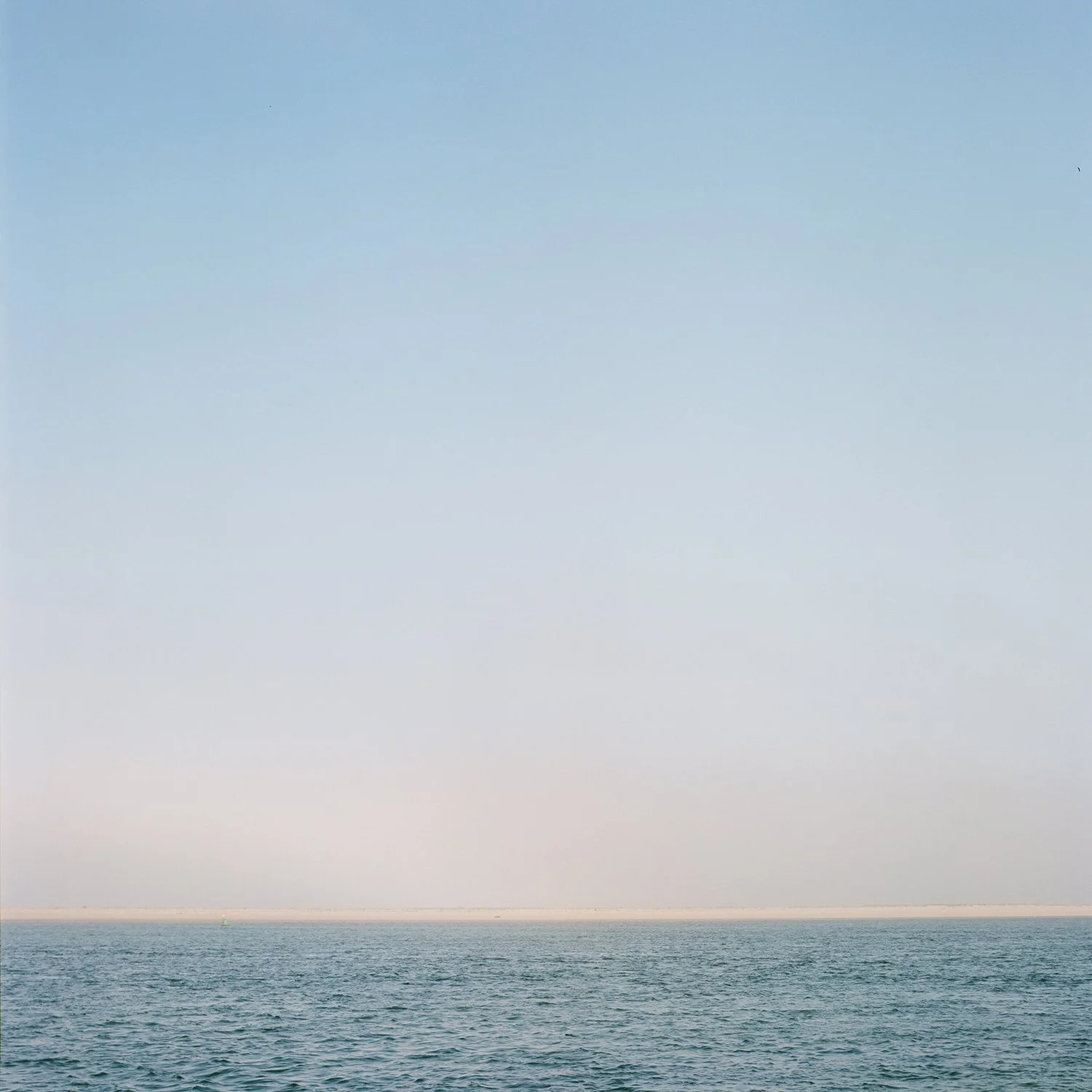
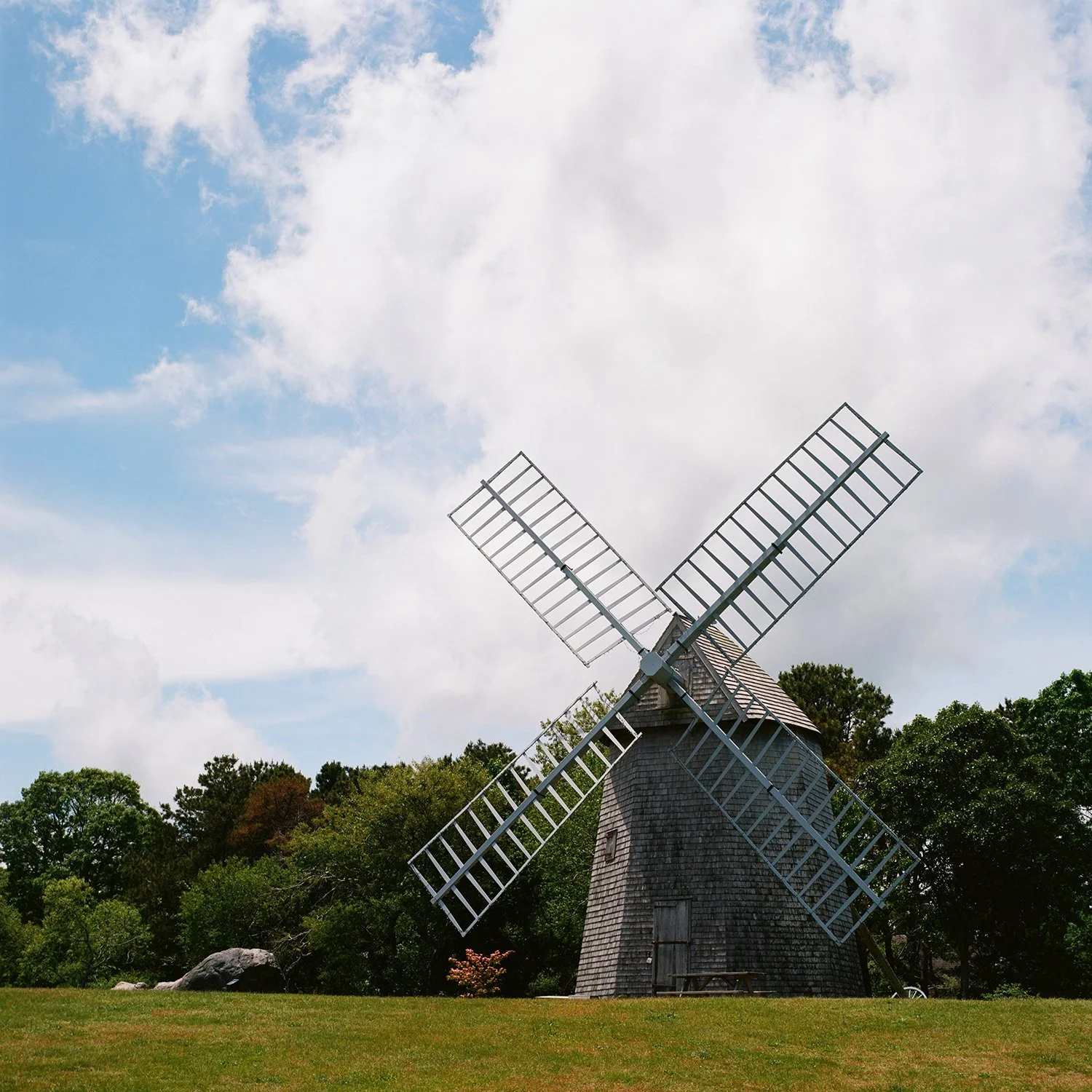
The pine trees are a big part of that feeling for me. I’ve always loved trees, but there’s something particular about the pitch pines on the Cape. They’re iconic, evergreen, and steady. The smell of the pine forests, the texture underfoot, the shape of the cones, it all stays with you. What stands out even more is how they exist alongside the coast. They’re exposed, shaped by wind and salt, constantly holding their ground. There’s a quiet resilience to them, a sense that they’re always on the edge of being taken, yet still standing. There’s something in that tension that feels comforting and exhilarating all at the same time. A kind of aliveness that comes from that balance.
Over time, I’ve started to notice more, not just the obvious beauty, but the details. The small, almost hidden things, the prayer flags along the Nauset trail, a glimpse of something unexpected, like a turret tucked away further up the Cape. The sound of red-winged blackbirds. The feeling of being surrounded by, and part of, nature, and not observing it from a distance. It’s not that my eye has changed completely, but I do see more now. Or perhaps I just take more time to look, which is carried into how I photograph the Cape.
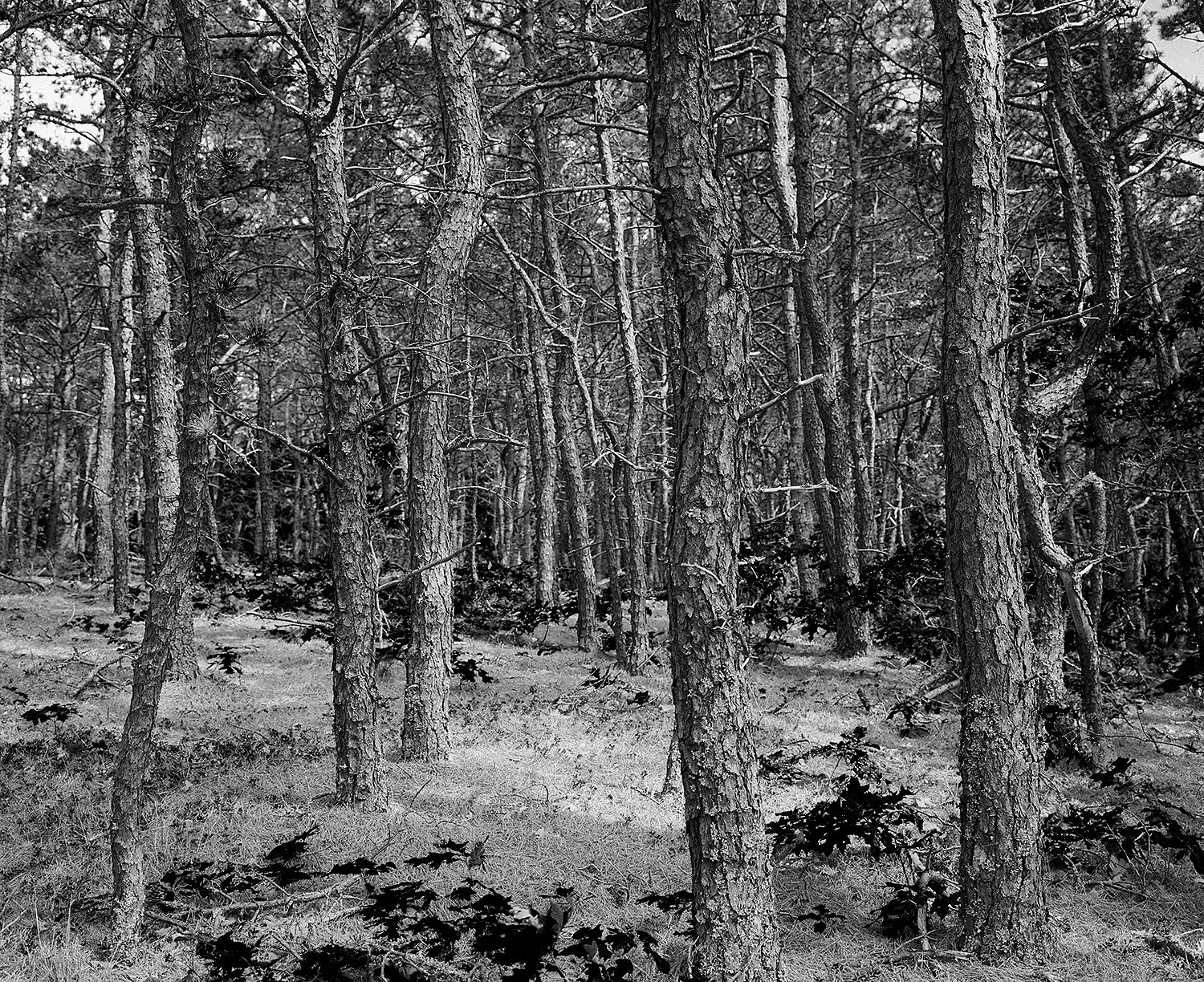
Pitch Pine forest on the Nauset trail, the smell of pines in the warm air stays with me.
When I’m out with my camera, I’m not trying to capture everything, there’s no checklist, no fixed subject. It’s simply the things that speak to me, the light, nature, the tones, textures, and people. It’s rarely the scene itself that I’m drawn to, it’s something more intangible. A moment, an atmosphere, the feeling of a place rather than the place itself. The camera just becomes a way of paying closer attention and attempting to capture the essence of it.
There are moments that stay with you long after you leave, though they’re not always the obvious ones. I remember standing in the water while fishing, when a murmuration of seabirds moved around me, shifting and turning as one. It was brief, but completely absorbing. Another is the fog rolling in off the sea, slowly at first, then all at once, until everything feels softened and quietened. It changes everything, the smell, the things you see, and even the sounds.
When you leave the Cape, it doesn’t feel finished, and everything in me tells me not to go. It stays with you in fragments, in senses more than memories. The smell of the air, the movement of the light, the feeling of being there without needing anything else, there’s a pull to return, almost a feeling that you shouldn’t have left in the first place.
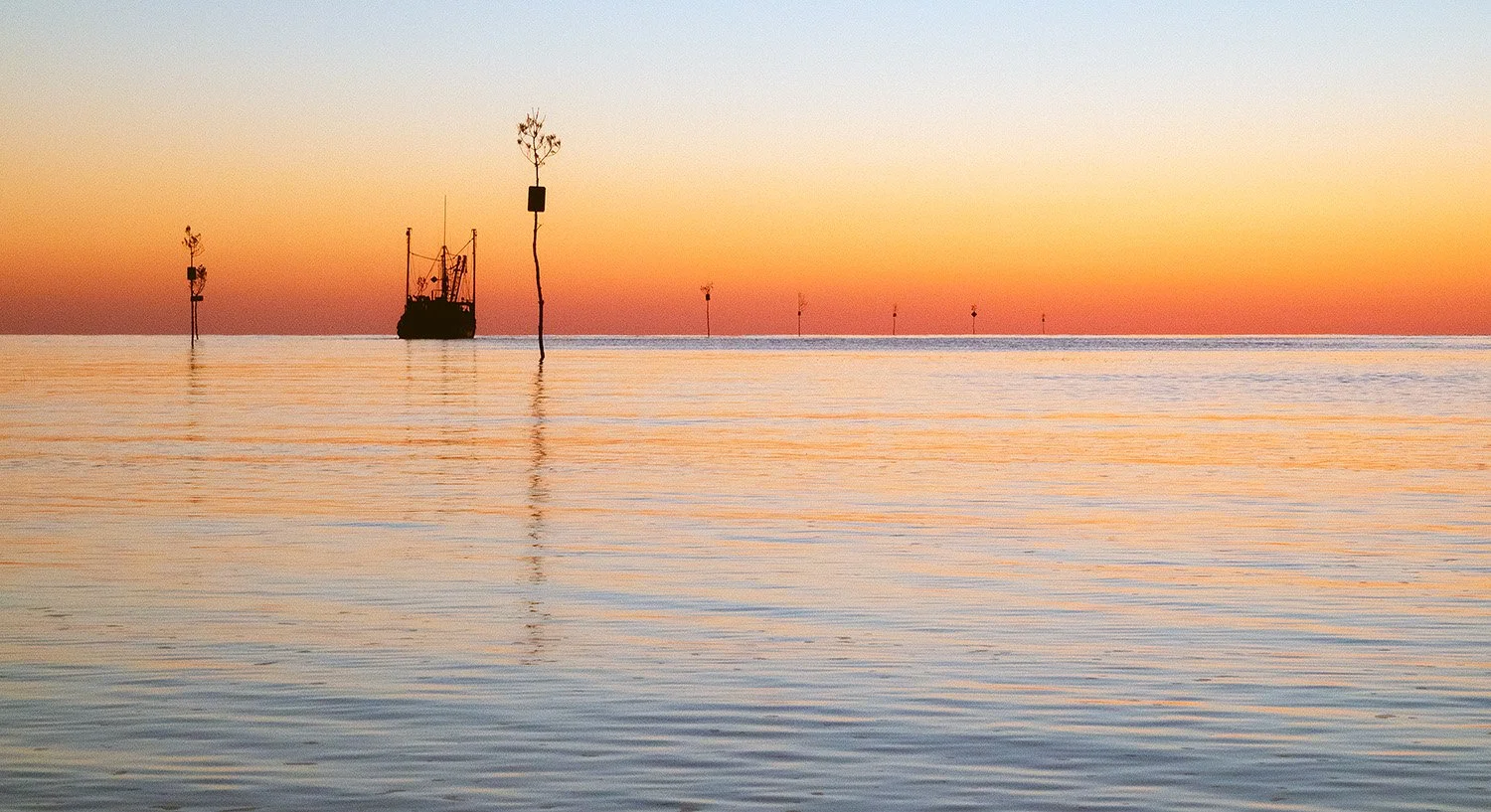
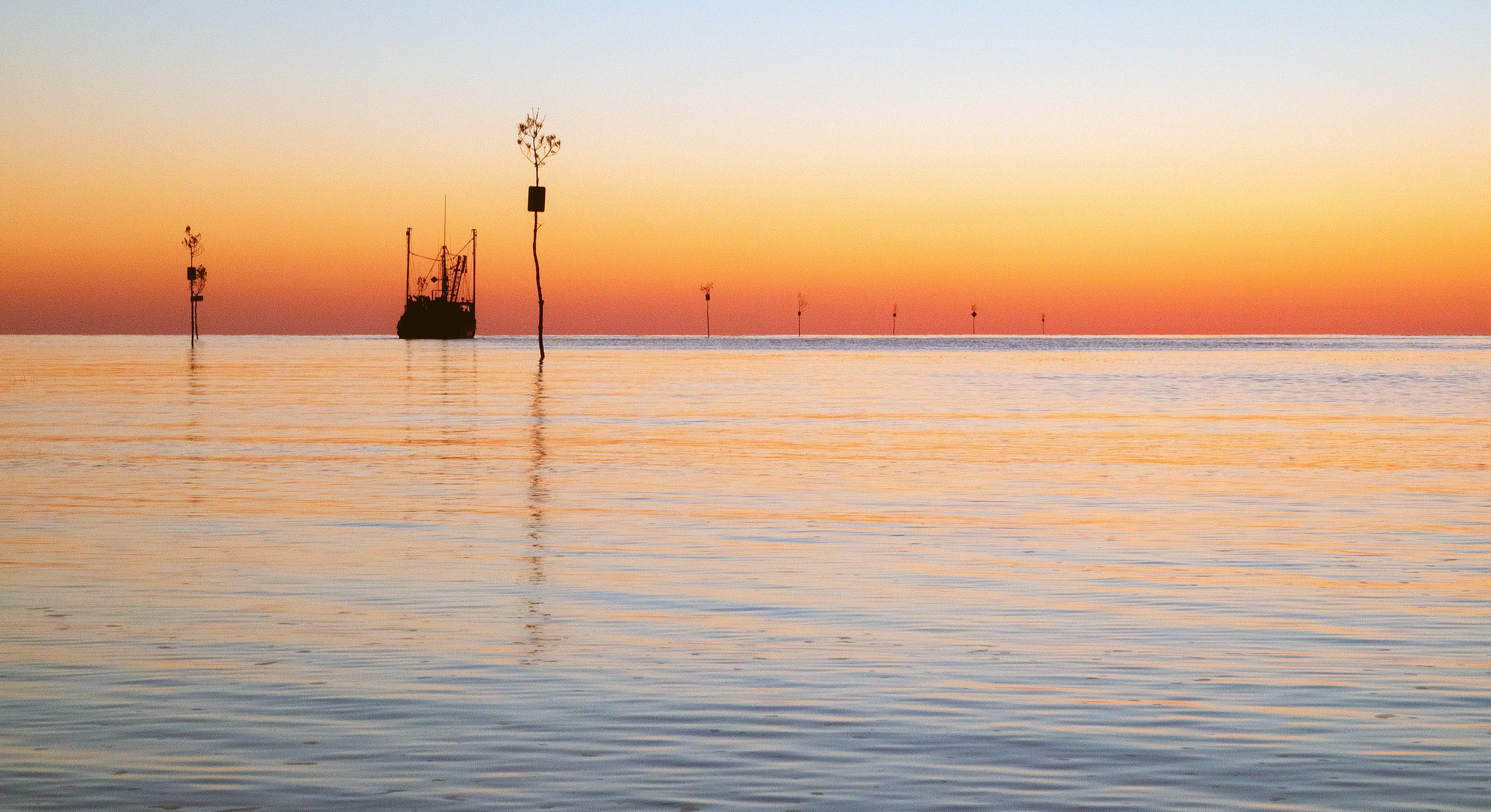
Fishing trawler returning at Rock Harbor, Orleans as the sun is setting on the inner Cape.
Perhaps part of it comes from somewhere deeper. I was born in England and spent summers by the sea, and there’s something about being near the ocean that feels familiar, and something missed. The Cape seems to bring that back in a way I didn’t expect. If someone had never visited the Cape, I don’t think I’d try to explain it too precisely. I’d probably just say it’s something like a quiet kind of magic, a place where land, sea, and weather are in constant conversation, where things feel exposed but grounded, and where you notice more, even if you don’t mean to. It’s a place that casts a sort of spell, and once you’ve felt it, you find yourself enchanted by its magic.
The photographs on this website and in my store are my attempt to capture a piece of that enchantment and magic, and perhaps even share a little with all of you.
Sincere thanks for visiting and please come back soon to read more posts on this blog.
G.